
Arbek Teknoloji
  1. Arbek
  2. Our Services
  3. Fuel Tank Calibration

Fuel Tank Calibration

Precise tank calibration and periodic verification eliminate measurement uncertainty and reveal stock losses at the source.

Fuel Tank Calibration

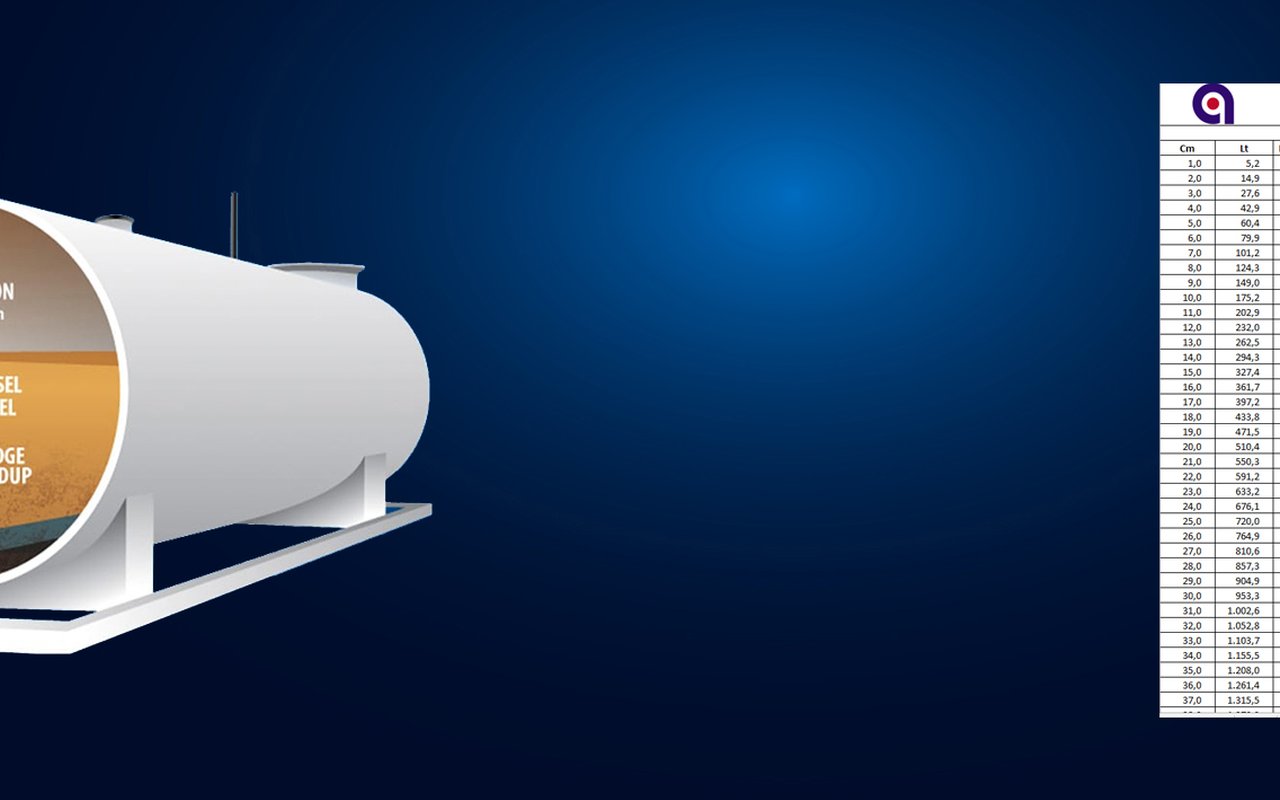
If the millimetre reading from the level probe is not matched to an accurate volume table, station stock never reconciles; the shortfall grows and its source stays hidden. We derive the mm-based volume-to-level table of underground and aboveground tanks by on-site measurement, verify tank geometry, and map the table onto the automation probe. The goal is a single equation; measured stock = litres sold = accounting record; kept intact through periodic re-verification.

Millimetric calibration tables for station and facility tanks, verification of level gauging systems, annual periodic checks.

01.

What this service covers

01
mm-Based Volume-Level Table

We measure each underground and aboveground tank on site to produce a per-tank calibration table giving the litre equivalent of every millimetre of level.

02
Tank Geometry Verification

We do not trust nameplate capacity; we measure tank tilt, settlement and shell deformation so the table rests on the tank's real geometry.

03
Mapping to the Automation Probe

We load the derived table into the station automation's level probe and validate probe readings against independent check measurements.

04
Stock-Sales-Accounting Reconciliation

Our acceptance criterion for calibration is that measured stock, litres sold at the pump and the accounting record show the same figure.

05
Stock Loss Source Analysis

By analysing the loss pattern, we separate whether a persistent shortfall comes from a table error, a tank or pipework leak, or evaporation and temperature-driven shrinkage.

06
Periodic Re-Verification

Because settlement, refurbishment or product changes shift the table over time, we confirm the calibration with scheduled check measurements.

07
EPDK-Compliant Records

We document calibration and stock records so they are traceable in an EPDK audit and keep them ready in the station file.

08
Monitoring Centre Follow-Up

Under our install-and-operate model, our 24/7 monitoring centre tracks drift in the automation data and reports abnormal stock movement before it grows.

02.

How we proceed

  1. 1 Survey and Current State Tank count and type, existing tables, automation infrastructure and shortfall history are examined on site; work is planned per tank.
  2. 2 Field Measurement Each tank gets an mm-based volume measurement and geometry verification; the measurement order is arranged to disrupt station sales as little as possible.
  3. 3 Table Loading and Mapping The new table is loaded into the automation, probe readings are compared against independent check measurements and deviations are corrected.
  4. 4 Reconciliation Test Over an agreed observation period, measured stock, litres sold and the accounting record are compared; any remaining difference is traced and reported.
  5. 5 Periodic Verification and Monitoring Calibration is re-verified at planned intervals; on request, stock data is placed under continuous watch by our 24/7 monitoring centre.
03.

Frequently Asked

Can the station keep selling during calibration?

Work proceeds tank by tank; the tank being measured is temporarily taken out of service while the others can stay in operation. The exact plan is set at the survey based on your tank and pump layout.

How often is recalibration needed?

There is no single standard interval; tank age, ground settlement, refurbishments and the shortfall trend are what matter. At the end of the survey we propose a verification period per tank.

Can you really tell whether our shortfall is a leak or a calibration error?

The first step is verifying the table; if the table is correct, we analyse the shortfall pattern: proportional to sales, constant, or concentrated at certain levels. That pattern separates calibration error, leakage and shrinkage; the final conclusion is reported together with field findings.

Can you work with our existing automation system?

A calibration table is vendor-independent data; it is mapped onto your existing probe and automation software. The system's table format and access rights are clarified at the survey.

Get a quote for Fuel Tank Calibration

Reach out for a survey and offer; we reply within 24 hours.

Get a Quote Ara